
 México
In June 2026, Mexico will once again be at the center of the world.
It’s not the first time. But this time, it will be different.
For the first time in history, a World Cup will feature 48 teams, over 100 matches, and a global audience exceeding 6 billion people. For a few weeks, the world’s attention won’t just be on football—it will be on everything Mexico represents: its operational capacity, its infrastructure, its brands, its talent, and its economic potential.
But here’s the real question for the business sector:
Will the World Cup be just a temporary boost… or a genuine lever for long-term growth?
More than football: a direct injection into the economy
During the tournament, Mexico’s economy will experience an unusual surge.
An estimated 5 to 5.5 million international visitors are expected, each spending between $900 and $2,000 USD. This translates into an economic impact of up to $3.5 billion USD.
What matters is not just the total number—but how it is distributed:
- Hospitality is expected to generate more than $600 million USD in additional revenue
- Food and beverage could exceed $700 million USD
- Retail and consumer spending will rise significantly due to the collective experience
Meanwhile, GDP growth could see an increase of between 0.1% and 0.6%, depending on how effectively the opportunity is leveraged.
In other words: the World Cup doesn’t transform the economy structurally…
but it does create a consumption shock that few industries can afford to ignore.
Where the real game is played: businesses
The World Cup doesn’t impact all sectors equally.
Some industries are, quite literally, playing in a different league:
Infrastructure and construction
Host cities are driving investments exceeding $200 billion pesos, from stadium upgrades to urban mobility improvements.
Tourism and hospitality
The challenge is not just to receive visitors—but to deliver memorable experiences at scale.
Transportation and mobility
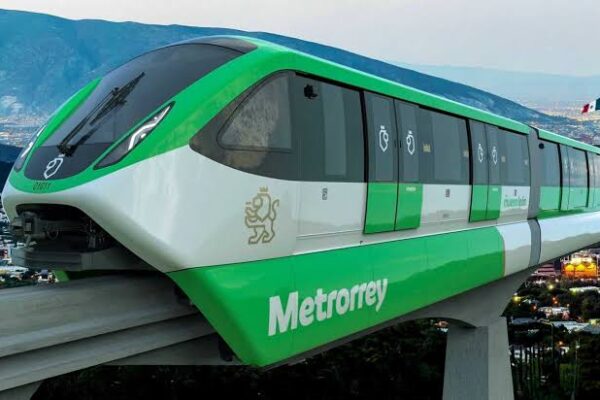
Platforms like Uber and smart mobility solutions will be critical. Studies suggest that up to 50% of attendees depend on these services to move around.
Consumer goods and brands
During events of this magnitude, beverage consumption can increase by:
- Up to 60% for alcoholic drinks
- Around 20% for non-alcoholic beverages
This is where brands truly compete: in their ability to turn attention into preference.
The unseen impact: social transformation
Beyond the numbers, the World Cup reshapes behavior.
Between 24,000 and over 100,000 temporary jobs are expected, particularly in tourism, logistics, and services. But the most significant effect is less visible:
- New skills in hospitality and international operations
- Exposure to global service standards
- Rising expectations from both workers and consumers
Previous experiences, such as Brazil 2014, show that these events do more than boost the economy:
they redefine the relationship between citizens, businesses, and government.
A stress test for the country—and its reputation
Hosting a World Cup is not just an opportunity. It is an international evaluation.
Mexico will be assessed in real time on:
- Security
- Mobility
- Airport capacity
- Digital infrastructure
- Tourist experience
Investment in stadiums alone exceeds $300 million USD, but the real value lies in the intangible:
👉 Trust
👉 Credibility
👉 Future investment attraction
A well-executed World Cup strengthens a country’s global positioning.
A poorly managed one does the same—just in the opposite direction.
The real business case: what happens next
This is where most conversations stop—and where the real opportunity begins.
The World Cup lasts a month.
Its impact can last for years.
Mexico is investing more than 30 billion pesos in urban infrastructure, transportation, and connectivity. These are projects that might have taken years to materialize—but the World Cup accelerates them.
Host cities won’t just receive tourists.
They will evolve into more competitive economic hubs.
The real opportunity lies in turning that momentum into lasting legacy:
- Better connectivity
- Stronger talent attraction
- More favorable environments for investment
So, what does the World Cup really mean for business?
The World Cup is not an automatic solution.
It is a multiplier of what already exists.
For organizations, the value doesn’t lie in simply participating—but in how they engage:
- Can they scale operations to meet peak demand?
- Will they leverage visibility to position their brand globally?
- Can they convert temporary customers into long-term relationships?
Because in the end, the real game is not played on the field.
It is played in how organizations understand that this is not just a sporting event—it is a deeply strategic moment.
One final thought
World Cup 2026 will not only be remembered for its goals.
It will be remembered for what Mexico—and its businesses—did with the opportunity to stand, once again, at the center of the world.
¡Comparte esta entrada, elige tu plataforma!
Related
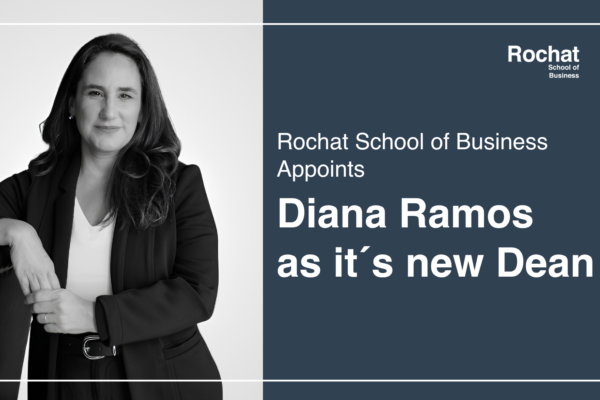
Rochat School of Business Appoints Diana Ramos as New Rector
Monterrey, Nuevo León, August 17, 2026. Rochat School of Business is pleased to announce the appointment of Diana Ramos as the institution’s new Rector, marking the beginning of a new chapter focused on educational innovation, international growth, and a stronger alignment between the competencies our students develop and the real-world challenges faced by organizations. Diana
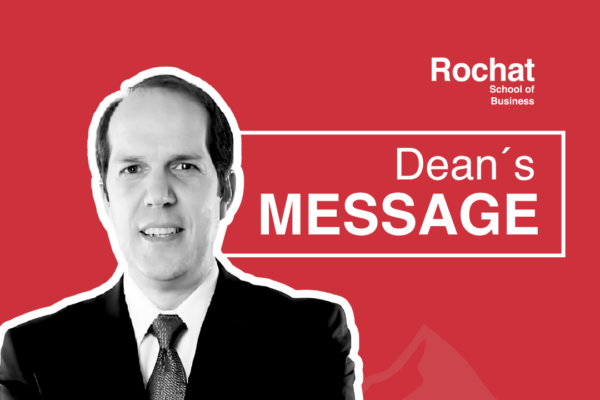
Dean´s Message
July 2026 At Rochat School of Business, we understand that today’s business environment demands more than adaptation—it requires a vision capable of anticipating what lies ahead. Today, artificial intelligence is reshaping the way we make decisions, sustainability is consolidating itself as a strategic driver of competitiveness, and leadership is evolving toward a balance between data-driven

Rochat integrates Swiss private degrees with U.S. ACBSP-accredited business education.
Rochat is an international higher education institution with academic presence in Switzerland and Mexico, operating through Rochat School of Business (Switzerland) and Rochat Escuela de Negocios (Mexico), a dual-online campus structure designed to serve both English-speaking and Spanish-speaking students worldwide. We proudly announce that the business administration programs (bachelor’s and master’s levels) delivered by Rochat

Inspiring Student Testimonies
Rebeca Lackey “Thank you so much for facilitating such a positive learning environment! My instructors are professional, helpful, and enjoyable. The consistency of how the program runs is perfectly compatible with my busy life. I have learned so many important skills from my experience with Rochat so far. Those skills are helping me academically and professionally.
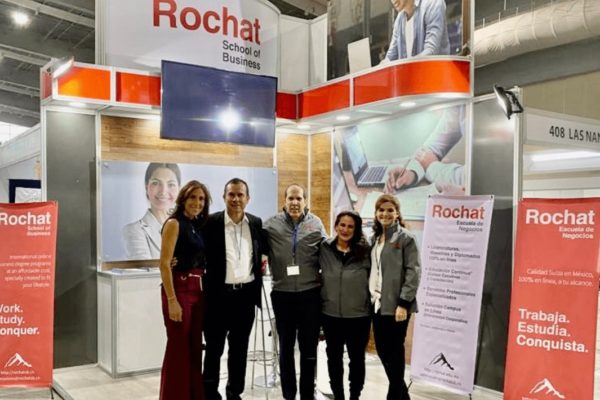
XIV World Congress of Families – Mexico City 2022
Rochat School of Business participated with a stand in the XIV World Congress of Families held in Mexico City during the past week form September 30th to October 2nd. The World Congress of Families (WCF) is an international, interfaith public event that seeks to unite and support leaders, organizations and families to affirm, celebrate and
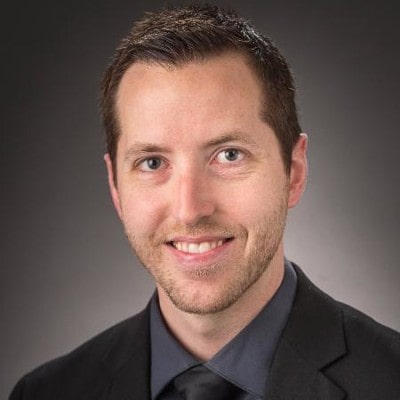
Inspiring Student Stories: Meet Jason Skurupey
Jason Skurupey has spent over 16 years of his professional career working in contact centers. He has the desire to leverage his extensive knowledge of the industry best practices to improve business processes, and employee engagement and build strong relationships with a sense of purpose, dedication, and accountability. His most important accomplishment is generating positive