
 México
AI doesn’t make your learning obsolete; it changes how you need to do it.
There’s a scene that has probably happened to you this week: you open a document to study or work, read a paragraph that doesn’t quite make sense, and almost without thinking, you open another tab and ask an AI. The answer comes back in seconds—clear, structured, and tailored to what you needed. What used to require stopping, rereading, and reconstructing an idea now resolves almost instantly.
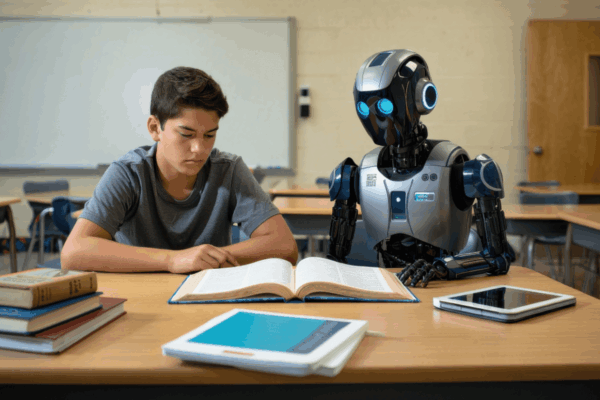
The difference isn’t minor. It’s not just about speed. It’s a change in how learning happens.
For a long time, learning was tied to access. The professor explained, the student listened, and knowledge lived in books, programs, and defined structures. Memorization made sense because you couldn’t always look things up. Remembering was a practical tool. Knowing meant being able to act.
That context no longer exists. But many of its practices remain.
There are still students who study to pass, not to understand. Professionals who execute familiar tasks well but hesitate when the context changes. Teams that operate with precision but without questioning. Not because they lack capability, but because the system in which they were trained prioritized something else: retaining information, not necessarily working with it.
That’s where traditional tools begin to show their limits. The textbook still organizes knowledge, the lecture still translates it, and the exam still validates whether it was retained. But today, access is no longer the bottleneck. The value is no longer in finding answers, but in knowing what to do with them. And that changes the type of skill that actually matters.
This is where artificial intelligence enters—not as a threat, but as a new layer on top of the learning process.
AI is already embedded in how we study and work. It’s used to structure ideas, understand complex topics, prepare materials, and explore alternatives. It’s not exceptional anymore. It’s everyday. Ignoring it is no longer realistic, because most people around you are already using it in some form.
That’s the right starting point: AI doesn’t replace learning. It changes how it happens.
Used well, it’s a powerful tool. It lets you move faster, explore more paths, and understand from different angles. It reduces the friction that used to stop the process. It makes accessible what previously required more time or support.
But that same benefit introduces a new demand.
When answers are immediately available, the value shifts. It’s no longer about getting to the answer; it’s about understanding it, questioning it, and using it with judgment. AI doesn’t eliminate the effort of learning—it redistributes it. It removes part of the mechanical work, but leaves the intellectual work intact—and more visible.
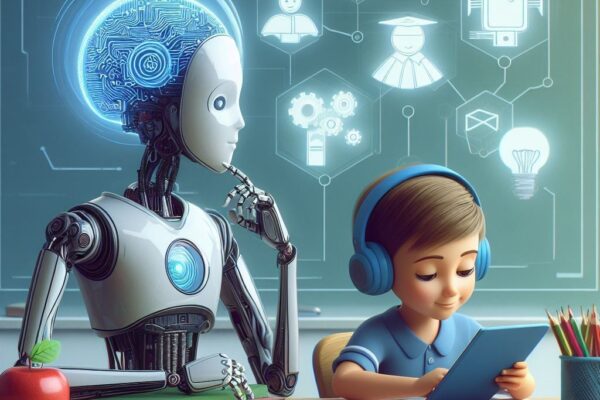
The risk isn’t using it. The risk is using it without changing how you learn.
When artificial intelligence becomes a permanent shortcut, the process empties out. You can solve without building. You can move forward without understanding. You can deliver results that seem correct, but that you can’t explain or adapt. That’s not a problem of the tool. It’s a disconnect in how it’s being used.
Used with intent, something different happens. AI becomes a space to test ideas, iterate faster, and ask better questions. It acts as an amplifier, not a substitute. But it only works that way if there’s a foundation of judgment behind it.
That’s the most important shift—and also the most demanding one.
The standard is no longer just “getting the right answer.” In many cases, that’s already solved. The standard now is being able to hold that answer: to understand why it works, when it stops working, and how to adapt it to a different context.
In education, this implies a deep adjustment. It’s not about restricting AI or romanticizing past models. It’s about redesigning the process. For those who teach, it means creating experiences where students don’t just produce results, but can explain them, defend them, and work beyond the first answer. For those who learn, it means taking on a different responsibility: not outsourcing understanding.
Because the tool is available to everyone. That’s no longer the differentiator.
The difference begins to show in how it’s used—how dependent you are on it, whether it helps you think better or ends up thinking for you.
Artificial intelligence is here to stay. That brings a clear opportunity: to elevate how we learn. To make the process faster, more flexible, and closer to how decisions are actually made. But it also carries a risk if used without structure: turning learning into a sequence of answers that don’t build real capability.
This is no longer about choosing whether or not to use it. That decision is already behind us.
What matters now is something more demanding: integrating the tool without losing what’s essential. That what you produce with AI, you can also explain without it. That speed doesn’t replace understanding. That access doesn’t replace judgment.
Because in the end, the difference isn’t who uses AI.
It’s who, while using it, actually understands what they’re doing.
¡Comparte esta entrada, elige tu plataforma!
Related
The Business of Nostalgia: What Nintendo Teaches Us About Consumer Behavior
The most successful companies do not always create something entirely new. Sometimes, they achieve something even more powerful: reconnecting customers with emotions and memories they thought they had left behind. Recently, Nintendo announced a new version of The Legend of Zelda: Ocarina of Time, one of the most influential video games in history, originally released

Why Your Next Sale May Depend More on AI Than Google
Not long ago, the formula for selling was straightforward: optimize your website, invest in keywords, and compete for a spot among Google’s top search results. Your customers would browse multiple tabs, read blog posts, and compare options on their own. Today, the rules of the game are changing. Anyone selling products or services can already

Anti-Marketing: Why Perfection Is Killing Your Business
The marketing world is divided into three camps: polished, carefully crafted, highly produced campaigns that are, above all, extremely expensive; digital nomads who can generate an entire campaign with a single click using AI-created content; and finally, those who have realized that today’s trend is all about what feels real, human, and not something produced
Farewell Message from Carlos Güereca, Founding Rector of Rochat School of Business
Dear Rochat School of Business Community, Today, I address you with mixed emotions. On one hand, I feel profound gratitude as I reflect on the journey we have traveled together. On the other, I feel a deep sense of confidence knowing that our institution is strong, thriving, and well positioned for the future. As of

Winning the World Cup: When the Trophy Is Not the Point
When a country wins the FIFA World Cup, most people focus on the obvious image: a group of players lifting a trophy in front of millions of viewers around the globe. But if you look at it from a business perspective, something much more interesting is happening. In reality, an organization has won an award.

What a 17-Year-Old Footballer Can Teach You About Investment
If a European club were to pay €15 million for Gilberto Mora tomorrow, most people would say it was buying a 17-year-old footballer. In reality, it would be buying something very different: more than a decade of accumulated investment. Training hours, multidisciplinary support teams, sports infrastructure, youth tournaments, medical care, specialized nutrition, and hundreds of