
 México
There is one decision your company probably assumes is settled: connectivity. Yet, there is a very high probability that, in the short term, a part of your operational force and your customer base will lose the signal on their phones. The obligation to link every mobile line to a National Identity Document (CURP) seems, on the surface, like a minor personal procedure. In practice, it hides a massive operational challenge that few companies are sizing up with the urgency it requires.
In Mexico, the registration of mobile lines seeks to eliminate the anonymity behind extortion and fraud. The argument aims to generate certainty in the country’s ecosystem. But for someone running a business, the value doesn’t lie in debating the intent of the measure, but in analyzing head-on how that decision alters their day-to-day. If we consider that a large portion of the market has not yet completed this process, we are facing a scenario where millions of lines could experience service interruptions overnight.
The first invisible impact of this blackout hits your cash flow directly. Think about your credit payment structure and collection strategies. Today, recovering a past-due portfolio or managing monthly payments depends almost entirely on immediacy: SMS reminders, WhatsApp notifications, and direct calls. If a fraction of your client portfolio suddenly loses their mobile line, those debtors fall off the radar. Your default rate won’t spike because people lost their ability to pay, but due to a technical communication blackout. The operational cost of tracking, notifying, and reconnecting with those clients will multiply, forcing your team to improvise much slower and more expensive contact routes.
That same paralysis extends to your transactional infrastructure. The mobile phone is no longer just a device for making calls; it is the master key to digital identity. Your client needs their number to receive the code that authorizes a bank transfer or to regain access to their social media profile. When that line is suspended, their access to their money and their ability to interact online is blocked.
For a bank, this translates into an avalanche of technical support requests and branches saturated with frustrated users who cannot operate their apps. For your business, if you depend on mobile authentication, confirmation messages, or the social media ecosystem to sell, your conversion funnel breaks instantly. The customer simply cannot complete the purchase.
Every regulation changes the playing field. On one hand, the registry offers a deep clean-up that will ultimately be a competitive advantage. Once the market absorbs the impact and the registry stabilizes, you will know that behind every phone number interacting with your platform is a verified user. That level of certainty dramatically reduces the risk of identity theft and financial fraud, accelerating secure digital transactions.
But the transition period will be turbulent, and inefficiencies compound. Those who lose their lines will seek immediate alternatives, saturating public and corporate WiFi networks, and opening the door to an informal market of pre-validated SIM cards that will complicate your ability to know who you are really interacting with.
Waiting to see how many of your clients’ or team’s lines disconnect is not a strategy; it’s operating blindly. The companies that gain an advantage from these external shifts do so because they analyze the situation before the screen loses its signal. They immediately review which critical processes—from validating a payment and closing a sale on social media, to contacting a client in default—require an active cellular line.
A measure designed for national security ends up becoming a real-time audit of your own commercial resilience. Mobile line registration demonstrates how an external procedure alters the core of your operation. How many critical processes in your business model dangerously assume that your client and your team will always have a signal on their phone?
¡Comparte esta entrada, elige tu plataforma!
Related
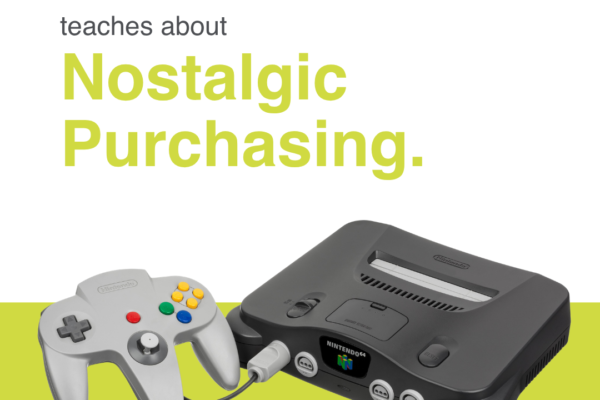
The Business of Nostalgia: What Nintendo Teaches Us About Consumer Behavior
The most successful companies do not always create something entirely new. Sometimes, they achieve something even more powerful: reconnecting customers with emotions and memories they thought they had left behind. Recently, Nintendo announced a new version of The Legend of Zelda: Ocarina of Time, one of the most influential video games in history, originally released

Why Your Next Sale May Depend More on AI Than Google
Not long ago, the formula for selling was straightforward: optimize your website, invest in keywords, and compete for a spot among Google’s top search results. Your customers would browse multiple tabs, read blog posts, and compare options on their own. Today, the rules of the game are changing. Anyone selling products or services can already

Anti-Marketing: Why Perfection Is Killing Your Business
The marketing world is divided into three camps: polished, carefully crafted, highly produced campaigns that are, above all, extremely expensive; digital nomads who can generate an entire campaign with a single click using AI-created content; and finally, those who have realized that today’s trend is all about what feels real, human, and not something produced
Farewell Message from Carlos Güereca, Founding Rector of Rochat School of Business
Dear Rochat School of Business Community, Today, I address you with mixed emotions. On one hand, I feel profound gratitude as I reflect on the journey we have traveled together. On the other, I feel a deep sense of confidence knowing that our institution is strong, thriving, and well positioned for the future. As of

Winning the World Cup: When the Trophy Is Not the Point
When a country wins the FIFA World Cup, most people focus on the obvious image: a group of players lifting a trophy in front of millions of viewers around the globe. But if you look at it from a business perspective, something much more interesting is happening. In reality, an organization has won an award.

What a 17-Year-Old Footballer Can Teach You About Investment
If a European club were to pay €15 million for Gilberto Mora tomorrow, most people would say it was buying a 17-year-old footballer. In reality, it would be buying something very different: more than a decade of accumulated investment. Training hours, multidisciplinary support teams, sports infrastructure, youth tournaments, medical care, specialized nutrition, and hundreds of
Hi everyone, I’m new here. I registered after looking through a few threads and seeing how helpful the conversations are. The site seems well organized, which makes it simpler for someone just starting to find relevant topics. I like the welcoming tone here and I’m excited about learning more. I have been learning about this over the past little while.
Welcome to the community, and thank you for your kind words.
We’re delighted to have you here and are glad that your first impression has been a positive one. Creating a welcoming space where professionals can learn, share ideas, and grow together is very important to us.
It’s great to hear that you’ve already started exploring the topics discussed here. We encourage you to join the conversation, ask questions, and share your own perspectives and experiences—every contribution enriches the learning journey for the entire community.
We look forward to learning and growing alongside you. Welcome aboard! 🚀