
 México
The marketing world is divided into three camps: polished, carefully crafted, highly produced campaigns that are, above all, extremely expensive; digital nomads who can generate an entire campaign with a single click using AI-created content; and finally, those who have realized that today’s trend is all about what feels real, human, and not something produced by a machine.
We live immersed in a flood of flawless content. Any company with a subscription to generative AI tools can now create an advertising campaign featuring studio lighting, impossibly symmetrical models, and copy without a single grammatical blemish. The problem is that this abundance has ended up numbing the audience. Modern consumers have developed an almost infallible radar for detecting synthetic perfection: the moment they recognize the hand of an algorithm or the overproduction of an agency, they scroll past without a second thought.
Faced with this visual saturation, a fascinating paradox has emerged in the industry: the more budget and polish an advertisement has, the less it converts. Instead, today’s market belongs to what strategists call anti-marketing or the lo-fi (low-fidelity) aesthetic.
The Triumph of Imperfection
The shift toward anti-marketing is not an accident but a deliberate strategy driven by the need to build genuine trust. When a brand posts a vertical video shot on a mid-range smartphone, complete with imperfect background noise and an improvised frame, it breaks through the user’s defensive barriers. Suddenly, the content is no longer processed as an intrusive advertisement invading the feed, but as a spontaneous recommendation shared by a friend.
Global brands such as Ryanair and Duolingo recognized this cultural shift before most others. Instead of producing solemn and forgettable corporate advertisements, they embraced absurd humor, meme formats, and constant self-deprecation. They openly joke about their own delays, complicated interfaces, and internal bureaucracy. By breaking the corporate fourth wall and engaging with audiences on equal footing, they use near-zero-budget content formats to generate levels of loyalty and engagement that traditional agencies could never replicate, even with millions of dollars at their disposal.
The Three Rules of Effective Anti-Marketing
Speed Over Post-Production
It is infinitely better to respond to a cultural trend within two hours using an imperfect video edited on a smartphone than to release a polished commercial three weeks later, when the conversation has already moved on and the topic has become irrelevant.
Humanizing the Mess
Showing the seams of the business, whether it is the package that broke in the warehouse, the design meeting that went wrong, or the ugly prototype that ended up in the trash, builds an asset that AI cannot replicate: authenticity.
Strategic Vulnerability
Openly acknowledging a product’s limitations eliminates the consumer’s natural skepticism. If a brand is honest about where it falls short, audiences are far more likely to believe it when it highlights its genuine strengths.
The Line Between Genuine and Negligent
Adopting anti-marketing does not, under any circumstances, mean neglecting your value proposition. The “ugliness” and informality apply exclusively to the narrative packaging and communication channels, never to product quality, safety, or customer service. Delivering a mediocre customer experience under the guise of being “authentic” or “rebellious” is the fastest route to operational failure.
In a hyper-automated economy where perfect content has become a cheap and generic commodity, human imperfection has become the real luxury. The companies that will survive the consumer’s filter will not be those that generate the most dazzling images, but those that have the courage to be real.
¡Comparte esta entrada, elige tu plataforma!
Related
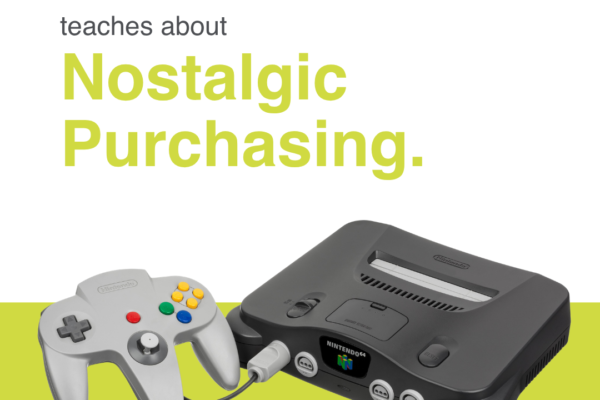
The Business of Nostalgia: What Nintendo Teaches Us About Consumer Behavior
The most successful companies do not always create something entirely new. Sometimes, they achieve something even more powerful: reconnecting customers with emotions and memories they thought they had left behind. Recently, Nintendo announced a new version of The Legend of Zelda: Ocarina of Time, one of the most influential video games in history, originally released

Why Your Next Sale May Depend More on AI Than Google
Not long ago, the formula for selling was straightforward: optimize your website, invest in keywords, and compete for a spot among Google’s top search results. Your customers would browse multiple tabs, read blog posts, and compare options on their own. Today, the rules of the game are changing. Anyone selling products or services can already
Farewell Message from Carlos Güereca, Founding Rector of Rochat School of Business
Dear Rochat School of Business Community, Today, I address you with mixed emotions. On one hand, I feel profound gratitude as I reflect on the journey we have traveled together. On the other, I feel a deep sense of confidence knowing that our institution is strong, thriving, and well positioned for the future. As of

Winning the World Cup: When the Trophy Is Not the Point
When a country wins the FIFA World Cup, most people focus on the obvious image: a group of players lifting a trophy in front of millions of viewers around the globe. But if you look at it from a business perspective, something much more interesting is happening. In reality, an organization has won an award.

What a 17-Year-Old Footballer Can Teach You About Investment
If a European club were to pay €15 million for Gilberto Mora tomorrow, most people would say it was buying a 17-year-old footballer. In reality, it would be buying something very different: more than a decade of accumulated investment. Training hours, multidisciplinary support teams, sports infrastructure, youth tournaments, medical care, specialized nutrition, and hundreds of
The invisible cost of mobile registration: what it really means for your operation
There is one decision your company probably assumes is settled: connectivity. Yet, there is a very high probability that, in the short term, a part of your operational force and your customer base will lose the signal on their phones. The obligation to link every mobile line to a National Identity Document (CURP) seems, on